
1. Introduction & Approach
Boss, given your deep expertise in flax fiber production and export at Sonbol Flax Co., you already understand the material’s inherent strength, versatility, and agricultural value. However, to help you expand into or dominate the plumbing and sanitary hardware market, this report is designed to teach you the plumbing-specific dynamics from the ground up.
We will break down exactly how thread sealing works, how the primary synthetic competitor (Teflon) operates, and where your natural flax fiber holds a distinct technical and commercial advantage, as well as where it faces practical limitations.
2. The Contenders: How They Work in Plumbing
In plumbing, threaded connections (like a pipe screwing into a valve) are never perfectly smooth. Microscopic gaps exist between the male and female threads, which must be filled to prevent water or gas leaks.
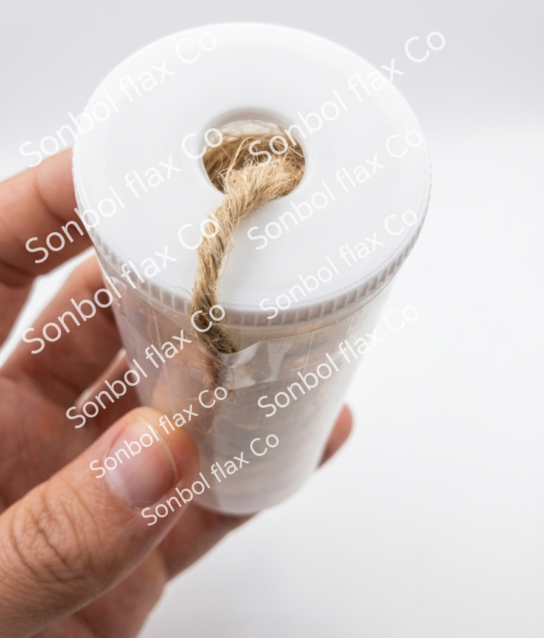
- Flax Fiber (Linen Tow) + Sealing Paste: In plumbing, flax is not used dry. It is processed into a “tow” (a continuous, untwisted strand of fibers) and wrapped around the male threads. It is then saturated with a sealing paste (often called “pipe dope”). The flax provides the structural bulk to physically fill the thread gaps, while the paste lubricates the assembly, prevents the natural fiber from rotting, and cures to lock the seal in place.
- Teflon (PTFE) Tape: Polytetrafluoroethylene (PTFE) is a synthetic fluoropolymer. In plumbing, it is extruded into a thin, slippery white or yellow tape. Its primary function is to act as a lubricant, allowing the threads to tighten deeper than they normally would, while its deformable nature smears into microscopic gaps to block leaks.


3. Head-to-Head Benefits Analysis
3.1. Sealing Performance & Pressure Resistance
- Flax Fiber: When flax gets wet, the natural fibers swell slightly. This creates a “self-healing” effect, making the seal tighter over time. It is highly effective at filling coarse or slightly damaged threads and handles high-pressure systems exceptionally well.
- Teflon Tape: While effective for standard residential pressures, PTFE tape can easily shred, bunch up, or tear during assembly if wrapped incorrectly. In high-pressure systems, this can leave gaps that lead to leaks.
3.2. Vibration and Mechanical Stress
- Flax Fiber: Once the sealing paste cures, the flax fibers lock into the threads, making the joint highly resistant to vibrations, water hammer, and mechanical movement.
- Teflon Tape: PTFE is susceptible to “cold flow” (creep), meaning it can slowly deform or loosen over time when subjected to continuous vibration or thermal cycling, making it less reliable for dynamic systems.
3.3. Temperature and Chemical Resistance
- Flax Fiber: Naturally resistant to high temperatures, making it a traditional staple in heating, radiator, and steam systems. However, its chemical resistance depends entirely on the quality of the sealing paste used alongside it.
- Teflon Tape: Exceptional chemical inertness and heat resistance. It does not degrade when exposed to aggressive chemicals, fuels, or gases, which is why it is widely specified in industrial and gas lines.
3.4. Environmental Impact and Sustainability
- Flax Fiber: 100% natural, biodegradable, and renewable. As global regulations tighten around “forever chemicals” (PFAS), natural flax offers a non-toxic, eco-friendly alternative that aligns with green building certifications (like LEED or BREEAM).
- Teflon Tape: PTFE is a fluoropolymer related to PFAS. Its manufacturing process and end-of-life disposal raise significant environmental concerns, as it does not biodegrade and persists in ecosystems.
3.5. Ease of Application and Material Compatibility
- Flax Fiber: Requires skill, practice, and the correct winding technique to apply properly. Furthermore, it is not recommended for plastic fittings (like PVC or CPVC), as the friction and force required to compress the flax can crack or strip delicate plastic threads.
- Teflon Tape: Extremely user-friendly, clean, and fast to apply. It is the undisputed preferred choice for plastic fittings because it provides excellent lubrication without the risk of damaging the threads.

4. Strategic Use Cases: When to Specify Which
| Application Scenario | Recommended Material | Why? |
|---|---|---|
| Metal-to-Metal Connections (Steel, Brass, Iron) | Flax Fiber + Paste | Superior gap-filling, vibration resistance, and long-term durability. |
| Plastic Fittings (PVC, CPVC, PEX) | Teflon Tape | Prevents thread damage; flax is too abrasive and requires too much torque. |
| High-Temperature / Heating Systems | Flax Fiber + Paste | Handles thermal expansion and high heat better than standard PTFE. |
| Large-Diameter Pipes (1 inch and above) | Flax Fiber + Paste | Provides the necessary bulk to fill large thread gaps; tape often fails here. |
5. Strategic Opportunities for Sonbol Flax Co.
As a flax supplier and exporter from Egypt, you are in a prime position to capitalize on the weaknesses of Teflon. Here are actionable strategies:
- Market the “Green Plumbing” Advantage: Leverage the growing global backlash against PFAS plastics. Position Egyptian flax tow as the premium, non-toxic, biodegradable alternative for eco-conscious markets, particularly in the EU and North America.
- Solve the “Ease of Use” Problem: The biggest barrier to flax adoption is the skill required to apply it. Consider partnering with sealing compound manufacturers to create pre-treated flax or bundled kits (flax + applicator paste + instructions). This bridges the convenience gap with Teflon tape.
- Target Professional Plumbers, Not DIYers: DIYers will always buy Teflon tape for its simplicity. Your target market is professional plumbing contractors, municipal waterworks, and HVAC installers who care about call-back prevention. Educate them on how Teflon tape fails under vibration and high pressure, positioning your flax as the “professional’s choice” for permanent, leak-free installations.
- Highlight Egyptian Flax Quality: Emphasize the long staple length and high tensile strength of Egyptian flax. In plumbing, longer, stronger fibers mean less breakage during wrapping and a more uniform, reliable seal.
6. Conclusion
While Teflon (PTFE) tape dominates the low-skill, plastic-fitting, and quick-repair segments of the market, flax fiber remains technically superior for demanding, high-performance, and eco-conscious metal plumbing applications.
By understanding these plumbing-specific dynamics, Sonbol Flax Co. can move beyond selling a raw commodity and instead market a high-value, specialized sealing solution that solves real problems for professional installers worldwide.
7. Sources & References
- Mojawoda (2025) – Tow vs Teflon Tape: How to Seal Threaded Joints
🔗 https://mojawoda.com/en/blog/installation-and-service/packing-materials-should-you-use-teflon-how-to-wrap-packing-materials-and-teflon-tape
(Details the advantages of flax/hemp for high temperature/pressure applications, its disadvantages for plastics, and proper application techniques). - Onninen (2024) – Tow or Teflon Tape: Which is Better for Water Installations?
🔗 https://onninen.pl/en/article/tow-or-teflon-tape-which-is-better-for-water-installations
(Discusses traditional flax tow with sealing paste vs. modern PTFE tape, highlighting flax’s superiority in metal installations and Teflon’s ease of use for plastics). - Oatey Co. (2025) – Pipe Dope vs. Teflon Tape: Which Should You Use?
🔗 https://www.oatey.com/faqs-blog-videos-case-studies/blog/pipe-dope-vs-teflon-tape-which-should-you-use
(Explains the fundamental function of PTFE tape as a lubricant and sealant for tapered threads, and when professionals choose one over the other). - Titan Fittings (2025) – Why Teflon Tape Fails in High-Pressure Systems and What Engineers Should Specify Instead
🔗 https://www.titanfittings.com/articles/why-teflon-tape-fails-in-high-pressure-systems-and-what-engineers-should-specify-instead
(Highlights PTFE tape’s susceptibility to shredding, bunching, and creating gaps in high-pressure or high-vibration environments). - Environmental Protection Online / EPO (2023) – Is PFAS in Plumber’s Tape a Cause for Concern?
🔗 https://eponline.com/articles/2023/04/28/pfas-in-plumbers-tape.aspx
(Discusses the environmental and regulatory concerns regarding PTFE and PFAS “forever chemicals” in plumbing materials, supporting the eco-friendly angle for flax). - Permies (2024) – Sealing Compounds: Non-Toxic Alternatives to PTFE
🔗 https://permies.com/t/262811/Sealing-compounds-toxic-alternatives-PTFE
(Explores the growing industry and consumer push for non-toxic, natural alternatives like flax and hemp due to the environmental persistence of synthetic compounds). - PVC Fittings Online (2024) – Pipe Thread Sealant vs Polytetrafluoroethylene (PTFE) Tape
🔗 https://www.pvcfittingsonline.com/blogs/resource-center/pipe-thread-sealant-vs-polytetrafluoroethylene-ptfe-tape
(Compares the gap-filling thickness and reliability of pipe dope/flax combos versus thin PTFE tape).